
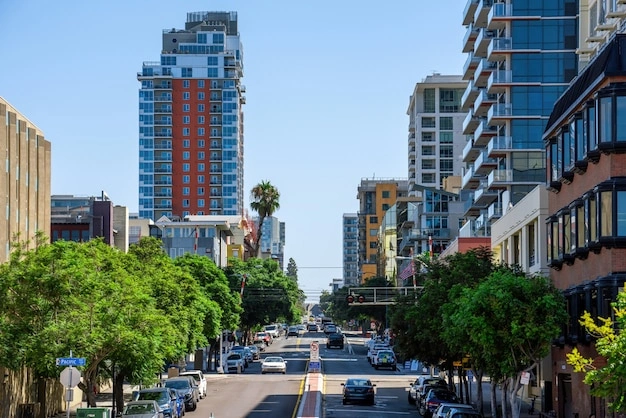
Commercial real estate in San Diego is not moving in a single direction right now.
Different segments are behaving differently. Industrial remains tight. Office is still adjusting. Retail is stable in specific formats. The opportunity is not in chasing trends, but in understanding where demand is holding and where it is weakening.
That’s where working with a trusted real estate advisor in San Diego becomes relevant. The difference is not access to listings. It’s knowing how to read the market behind them.
What the Data Is Showing Right Now
Recent commercial reports across San Diego point to a few consistent patterns:
- Industrial vacancy remains low, generally in the 3%–5% range, depending on submarket
- Office vacancy has expanded significantly, often ranging between 15%–20%+, especially in urban cores
- Retail vacancy remains relatively stable in well-located neighborhood centers
At the same time, higher interest rates have pushed cap rates upward, which has slowed transaction volume but created more negotiation room in certain segments.
A local market expert in San Diego real estate doesn’t treat these as abstract numbers. They use them to understand where risk is increasing and where stability still exists.
North County: Demand Following Population Growth
North County continues to see consistent movement, particularly in:
- Oceanside
- Vista
- San Marcos
These areas are benefiting from:
- Continued residential growth
- More balanced entry points compared to coastal markets
- Ongoing infrastructure and development activity
As residential density increases, demand for services follows. That supports small to mid-scale commercial property in San Diego, particularly in retail and service-oriented spaces.
There is also a visible connection between residential expansion and rental property in San Diego, especially in areas where affordability is driving population shifts inland.
A local market expert in San Diego real estate typically evaluates these areas based on demand stability rather than short-term appreciation.
Industrial Corridors: Consistency Over Volatility
Industrial remains one of the more stable segments in commercial real estate in San Diego.
Key submarkets include:
- Otay Mesa
- Miramar
- Kearny Mesa
What supports these areas:
- Proximity to logistics routes and the border
- Limited available inventory
- Continued demand from distribution and light manufacturing
Even with rising interest rates, industrial demand has remained relatively consistent. Lease structures in this segment also tend to provide more predictable income compared to office or retail.
This is not a high-growth segment in the short term. It is a stability-driven one.
Office Market: Selective, Not Broad
The office sector requires a more careful approach.
Vacancy levels have increased across San Diego, particularly in downtown and certain business districts. This has created opportunities, but they are not uniform.
What matters here:
- Building class and condition
- Location relative to transit and amenities
- Ability to reposition or adapt space
Some assets are trading below previous valuations, but that alone does not make them strong investments. Without clear tenant demand or repositioning potential, risk increases.
A local market expert in San Diego real estate approaches this segment with selectivity, not volume.
Retail: Stable Where Demand Is Local
Retail performance depends heavily on tenant type and location.
Neighborhood retail anchored by:
- Grocery stores
- Healthcare services
- Daily-use businesses
has remained relatively stable.
In contrast, larger retail formats without consistent foot traffic have faced more pressure.
For investors considering commercial property in San Diego, this distinction matters. Stability in retail is tied to necessity, not scale.
What Defines a Strong Commercial Location
Across San Diego, the areas that hold value tend to share a few characteristics:
- Consistent population growth or stable demand
- Limited competing inventory
- Clear use-case for tenants
This is why areas tied to residential expansion often support stronger long-term performance. Demand builds gradually and reflects in occupancy and lease stability.
Where Decisions Usually Go Wrong
Commercial decisions tend to go off track when:
- Pricing is evaluated without considering vacancy trends
- Tenant strength is overlooked
- Future demand is assumed rather than validated
- Financing conditions are ignored
These are not uncommon mistakes, especially in a market that is transitioning.
The Takeaway
San Diego’s commercial market is not about identifying the “best” area in isolation.
It’s about understanding how each segment is performing and where demand is holding up under current conditions.
Right now:
- North County offers steady demand tied to population growth
- Industrial corridors provide consistency with low vacancy
- Office requires selective, case-by-case evaluation
- Retail remains stable when tied to daily-use demand
The value is in understanding these differences before making a decision.
That’s where a trusted real estate advisor in San Diego adds clarity. Not by predicting the market, but by interpreting it correctly based on current conditions.